

Recent ASA HFSS Rulings: Where Brand Advertising Ends and Product Advertising Begins
Recent ASA HFSS Rulings: Where Brand Advertising Ends and Product Advertising Begins
The distinction between brand advertising and identifiable HFSS (high fat, salt and sugar) product advertising continues to be one of the most important considerations for marketers operating under the UK’s HFSS advertising restrictions. Recent Advertising Standards Authority (ASA) rulings provide valuable insight into how regulators assess this boundary, particularly where food brands use product imagery, brand assets and creative execution to promote their businesses.
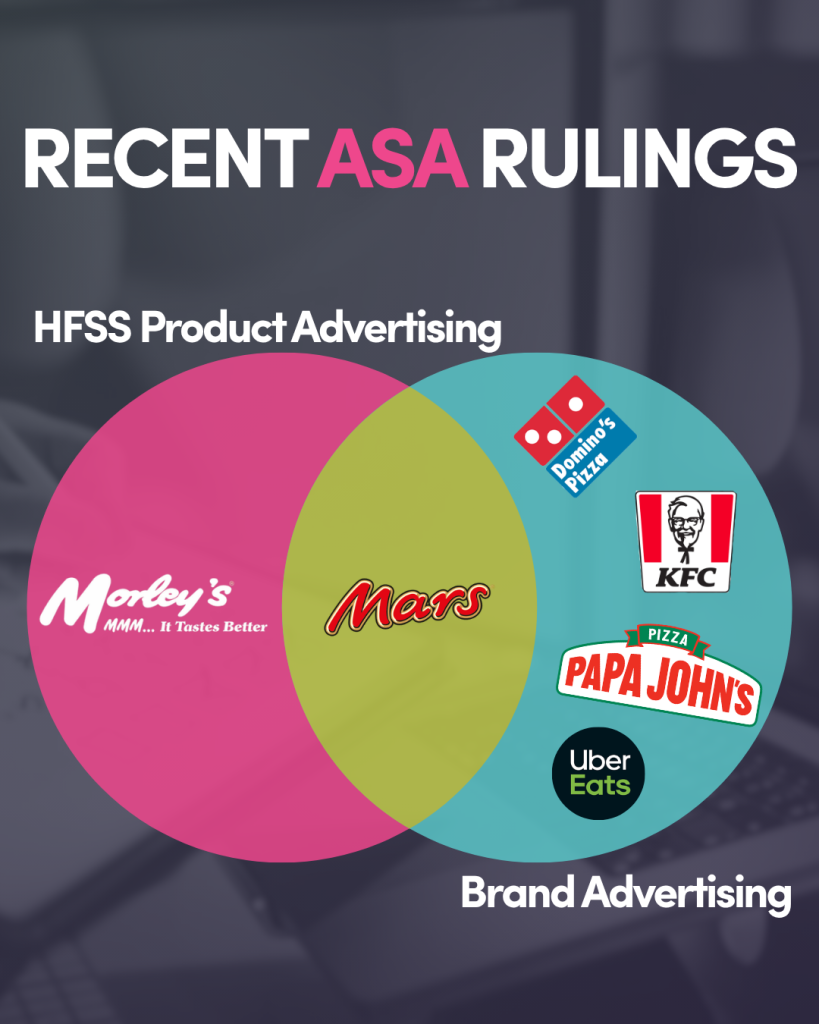
A review of recent cases involving brands including Domino’s, KFC, Papa John’s, Uber Eats, Mars and Morley’s demonstrates the factors the ASA considers when determining whether an advertisement falls within the scope of the HFSS rules. While some campaigns were deemed to be exempt brand advertising, others were found to promote identifiable HFSS products and therefore breached the Code.
This article explores the key rulings and highlights the practical lessons marketers can take away when developing campaigns in a regulated HFSS environment.

Recent ASA HFSS Rulings: Where Brand Advertising Ends and Product Advertising Begins
Recent ASA HFSS Rulings: Where Brand Advertising Ends and Product Advertising Begins
The distinction between brand advertising and identifiable HFSS (high fat, salt and sugar) product advertising continues to be one of the most important considerations for marketers operating under the UK’s HFSS advertising restrictions. Recent Advertising Standards Authority (ASA) rulings provide valuable insight into how regulators assess this boundary, particularly where food brands use product imagery, brand assets and creative execution to promote their businesses.
A review of recent cases involving brands including Domino’s, KFC, Papa John’s, Uber Eats, Mars and Morley’s demonstrates the factors the ASA considers when determining whether an advertisement falls within the scope of the HFSS rules. While some campaigns were deemed to be exempt brand advertising, others were found to promote identifiable HFSS products and therefore breached the Code.
This article explores the key rulings and highlights the practical lessons marketers can take away when developing campaigns in a regulated HFSS environment.
Not Upheld: Brand Advertising
Domino’s
Issue: Two complainants challenged whether the ads were paid aid for an identifiable less healthy food product placed on the internet.
Assessment: The realistic images of the pizzas were not visually indistinguishable from any specific less healthy food, meaning the ads were brand advertisements and where therefore out of the scope of the role and did not breach the Code.
KFC
Issue: 22 Complainants challenged whether the adverts were for an identifiable less healthy food product and was included in a regulated on-demand programme service between 5.30am and 9.00pm.
Assessment: The realistic images of the products were not visually indistinguishable from any specific less healthy food, meaning the ads were brand advertisements and where therefore out of the scope of the role and did not breach the Code. Ads were also investigated under CAP Code (Edition 12) rule 15.19 (Placement of less healthy food and drink product advertisements online) but did not find them in breach.
Papa John’s
Issue: The complainant challenged whether the ads were paid aid for an identifiable less healthy food product placed on the internet.
Assessment: Because the realistic image of the pizza in the ad was not visually indistinguishable from any specific “less healthy” food or drink, the ASA concluded the ad was a brand advertisement. It was concluded the ad was therefore out of scope of the rules and did not breach the Code.
Uber Eats
Issue: The complainant challenged whether the ad was a paid-for ad for an identifiable “less healthy” food product placed on the internet.
Assessment: Because the realistic image of the burger in the ad was not visually indistinguishable from a specific “less healthy” food or drink, The ASA concluded that the ad was a brand advertisement. It was concluded the ad was therefore out of scope of the rule and did not breach the Code.
Upheld: Brand Advertising + Identifiable HFSS Product
Mars (M&Ms)
Issue: Bite Back, a food campaigning group, challenged whether the ad was a paid-for ad for an identifiable “less healthy” food product placed on the internet.
Assessment: While the ad did promote the brand of a range of products, it also depicted (by way of a combination of imagery, colour and brand character) a specific “less healthy” food product – Peanut M&M’s. The exemption from the rules for brand advertising therefore did not apply. The ASA concluded that the ad was a paid-for ad for an identifiable less healthy food product and therefore breached the Code.
Upheld: Identifiable HFSS Product
S&E1Ltd (Morley’s Woking)
Issue: The complainant challenged whether the ad was a paid-for ad for an identifiable “less healthy” food product placed on the internet.
Assessment: Both parties accepted all the food items referenced in the ad were HFSS foods and we had not seen evidence to the contrary. On that basis, we concluded the burgers, wings, nuggets and fries were “less healthy” foods, the advertising of which was restricted by the “less healthy” food rule. The ASA concluded that the ad was a paid-for ad for identifiable “less healthy” foods and therefore breached the Code.
What this means for brands
These rulings demonstrate that the ASA’s assessment of HFSS advertising extends beyond the presence of food imagery alone. The key consideration is whether consumers are likely to recognise an identifiable less healthy food or drink product from the creative execution. Where advertising focuses on brand identity without depicting a specific HFSS product, it may fall outside the scope of the restrictions. However, where imagery, colours, packaging, characters or other distinctive brand assets combine to make a particular product identifiable, the brand advertising exemption is unlikely to apply.
As regulators continue to clarify their interpretation of the rules through enforcement activity, marketers should ensure HFSS campaigns are reviewed not only for explicit product references but also for visual and contextual cues that could lead consumers to identify a specific product. Understanding this distinction will be critical in reducing compliance risk while maintaining effective brand communications.
Key takeaways
- Brand advertising remains exempt, provided the creative does not depict or make identifiable a specific HFSS product.
- Product recognisability is the key test, not simply whether a brand is featured.
- The ASA assesses advertising holistically, considering imagery, colours, packaging, characters, branding and context together.
- Generic food imagery may be permissible where it is not visually indistinguishable from a particular HFSS product.
- Distinctive brand assets can create product identification, even when a product is not explicitly named.
- Marketers should undertake careful compliance reviews of HFSS campaigns, particularly where well-known products are strongly associated with brand colours, characters or visual cues.
- Recent ASA rulings provide useful benchmarks for assessing whether a campaign is likely to be treated as brand advertising or HFSS product advertising.

Not Upheld: Brand Advertising
Domino’s
Issue: Two complainants challenged whether the ads were paid aid for an identifiable less healthy food product placed on the internet.
Assessment: The realistic images of the pizzas were not visually indistinguishable from any specific less healthy food, meaning the ads were brand advertisements and where therefore out of the scope of the role and did not breach the Code.
KFC
Issue: 22 Complainants challenged whether the adverts were for an identifiable less healthy food product and was included in a regulated on-demand programme service between 5.30am and 9.00pm.
Assessment: The realistic images of the products were not visually indistinguishable from any specific less healthy food, meaning the ads were brand advertisements and where therefore out of the scope of the role and did not breach the Code. Ads were also investigated under CAP Code (Edition 12) rule 15.19 (Placement of less healthy food and drink product advertisements online) but did not find them in breach.
Papa John’s
Issue: The complainant challenged whether the ads were paid aid for an identifiable less healthy food product placed on the internet.
Assessment: Because the realistic image of the pizza in the ad was not visually indistinguishable from any specific “less healthy” food or drink, the ASA concluded the ad was a brand advertisement. It was concluded the ad was therefore out of scope of the rules and did not breach the Code.
Uber Eats
Issue: The complainant challenged whether the ad was a paid-for ad for an identifiable “less healthy” food product placed on the internet.
Assessment: Because the realistic image of the burger in the ad was not visually indistinguishable from a specific “less healthy” food or drink, The ASA concluded that the ad was a brand advertisement. It was concluded the ad was therefore out of scope of the rule and did not breach the Code.
Upheld: Brand Advertising + Identifiable HFSS Product
Mars (M&Ms)
Issue: Bite Back, a food campaigning group, challenged whether the ad was a paid-for ad for an identifiable “less healthy” food product placed on the internet.
Assessment: While the ad did promote the brand of a range of products, it also depicted (by way of a combination of imagery, colour and brand character) a specific “less healthy” food product – Peanut M&M’s. The exemption from the rules for brand advertising therefore did not apply. The ASA concluded that the ad was a paid-for ad for an identifiable less healthy food product and therefore breached the Code.
Upheld: Identifiable HFSS Product
S&E1Ltd (Morley’s Woking)
Issue: The complainant challenged whether the ad was a paid-for ad for an identifiable “less healthy” food product placed on the internet.
Assessment: Both parties accepted all the food items referenced in the ad were HFSS foods and we had not seen evidence to the contrary. On that basis, we concluded the burgers, wings, nuggets and fries were “less healthy” foods, the advertising of which was restricted by the “less healthy” food rule. The ASA concluded that the ad was a paid-for ad for identifiable “less healthy” foods and therefore breached the Code.
What this means for brands
These rulings demonstrate that the ASA’s assessment of HFSS advertising extends beyond the presence of food imagery alone. The key consideration is whether consumers are likely to recognise an identifiable less healthy food or drink product from the creative execution. Where advertising focuses on brand identity without depicting a specific HFSS product, it may fall outside the scope of the restrictions. However, where imagery, colours, packaging, characters or other distinctive brand assets combine to make a particular product identifiable, the brand advertising exemption is unlikely to apply.
As regulators continue to clarify their interpretation of the rules through enforcement activity, marketers should ensure HFSS campaigns are reviewed not only for explicit product references but also for visual and contextual cues that could lead consumers to identify a specific product. Understanding this distinction will be critical in reducing compliance risk while maintaining effective brand communications.
Key takeaways
- Brand advertising remains exempt, provided the creative does not depict or make identifiable a specific HFSS product.
- Product recognisability is the key test, not simply whether a brand is featured.
- The ASA assesses advertising holistically, considering imagery, colours, packaging, characters, branding and context together.
- Generic food imagery may be permissible where it is not visually indistinguishable from a particular HFSS product.
- Distinctive brand assets can create product identification, even when a product is not explicitly named.
- Marketers should undertake careful compliance reviews of HFSS campaigns, particularly where well-known products are strongly associated with brand colours, characters or visual cues.
- Recent ASA rulings provide useful benchmarks for assessing whether a campaign is likely to be treated as brand advertising or HFSS product advertising.
News

Experiential Diploma Open Day
A quick IPM recap of What Brits Want from Promotions 3.0, covering key consumer behaviours, motivations and insights shaping effective promotions in 2026.

The IPM Announces New Strategic Partnership with IMA Europe
A quick IPM recap of What Brits Want from Promotions 3.0, covering key consumer behaviours, motivations and insights shaping effective promotions in 2026.

IPM Awards 2026 Shortlist
IPM Awards 2026 shortlist revealed! Discover the campaigns, agencies and big ideas setting the standard in UK promotional marketing.
News
Experiential Diploma Open Day
A quick IPM recap of What Brits Want from Promotions 3.0, covering key consumer behaviours, motivations and insights shaping effective promotions in 2026.
The IPM Announces New Strategic Partnership with IMA Europe
A quick IPM recap of What Brits Want from Promotions 3.0, covering key consumer behaviours, motivations and insights shaping effective promotions in 2026.
IPM Awards 2026 Shortlist
IPM Awards 2026 shortlist revealed! Discover the campaigns, agencies and big ideas setting the standard in UK promotional marketing.