

Experiential marketing has long been recognised for its ability to create memorable brand moments, build emotional connections and engage audiences in ways few other channels can. Yet despite this effectiveness, the discipline continues to face a persistent challenge in proving its value.
That was the focus of our latest IPM webinar, Beyond Time and Place: Measuring Experiential Impact and Proving ROI, led by experiential marketing pioneer and creator of the Experiential Diploma, Michael Brown, alongside international creative leader Martin Osterhus.
The session explored how experiential marketers can move beyond the usual near-term impacts of the live experience to create longer term meaningful brand and business impact. The future of experiential depends on becoming more robustly accountable and strategically integrated.
These themes sit at the heart of the IPM’s new Experiential Marketing Diploma, a programme developed to establish a recognised standard for experiential marketing and equip practitioners with the strategic, creative and commercial skills needed to thrive in a rapidly evolving industry.

Beyond the Event: How Brands Can Measure Experiential Impact More Effectively
Beyond the Event: How Brands Can Measure Experiential Impact More Effectively
Experiential marketing has long been recognised for its ability to create memorable brand moments, build emotional connections and engage audiences in ways few other channels can. Yet despite this effectiveness, the discipline continues to face a persistent challenge in proving its value.
That was the focus of our latest IPM webinar, Beyond Time and Place: Measuring Experiential Impact and Proving ROI, led by experiential marketing pioneer and creator of the Experiential Diploma, Michael Brown, alongside international creative leader Martin Osterhus.
The session explored how experiential marketers can move beyond the usual near-term impacts of the live experience to create longer term meaningful brand and business impact. The future of experiential depends on becoming more robustly accountabl and strategically integrated.
These themes sit at the heart of the IPM’s new Experiential Marketing Diploma, a programme developed to establish a recognised standard for experiential marketing and equip practitioners with the strategic, creative and commercial skills needed to thrive in a rapidly evolving industry.
Experiential Isn’t an ‘Activation’. It’s a Campaign.
One of the strongest themes to emerge from the discussion was in how experiential can justifiably claim its rightful position at the heart of any media plan.
As Michael argued, too many organisations still view experiential as a standalone activation rather than a strategic campaign platform.
“Experiential is not tactical. It’s strategic.”
Rather than being confined to a specific place or moment in time, or as being complementary to but not central to the media plan, effective experiential marketing should create impact before, during and long after the live experience takes place. To do this, marketers need to ensure experiences are designed as content and key message engines capable of driving engagement across paid, owned and earned channels.
This shift in mindset is a key principle of the Experiential Marketing Diploma, which encourages practitioners to think beyond event delivery and develop a broader understanding of how experiential supports wider business and marketing objectives.
Is Amplification Even The Right Word
The webinar challenged the use of a very familiar term: amplification
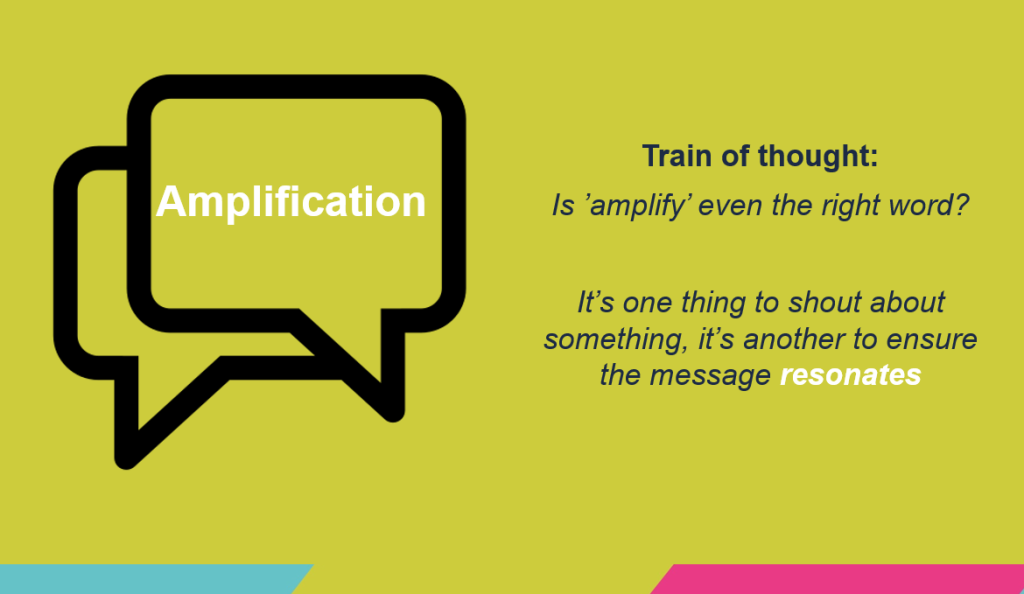
When we think about amplification, it comes hand in hand with such terms as reach and visibility. However, Michael suggested that marketers should focus less on volume and more on resonance.
“It’s one thing to shout about something. It’s another to ensure the message resonates.”
The idea here is that success should be measured by whether or not key messages land as intended with the right audiences and therefore positively impact attitudes, behaviours, brand health and business outcomes. Amplification is just noise if it doesn’t create proven impact in these areas.
Designing Experiences That Travel
For experiential campaigns to extend beyond the live moment, they need to be designed with the metrics (and mechanics to achieve those metrics) in mind from the outset.
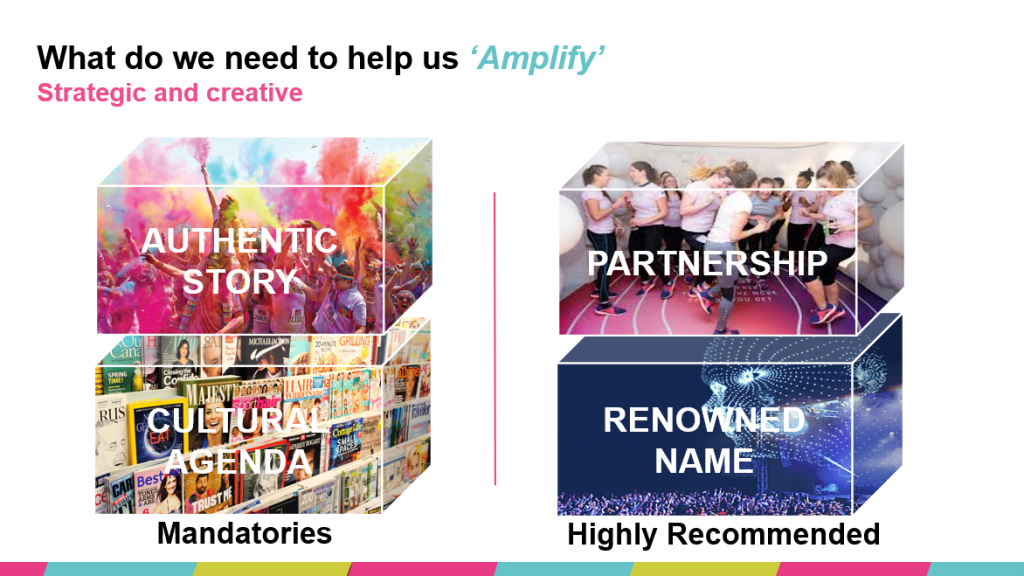
Michael outlined four key ingredients as a starting point from which to optimise the likelihood of an experience travelling beyond its physical location:
- An authentic brand story
- A relevant cultural agenda
- Strategic partnerships
- Credible voices, subject matter experts or advocates
These elements create the narrative foundations that open the way for experiences to become a content engine to power the entire media plan, while improving their potential to generate earned media, social sharing, positive sentiment and ongoing conversations.
Developing this type of strategic thinking is one of the reasons the Diploma was created; to help marketers build campaigns that deliver impact beyond time and place.
Why Experiential Needs to Speak the Language of the CFO
One of the most thought-provoking moments of the webinar centred on who experiential marketers are really trying to convince.
While big, insight-driven, creative ideas, the lifeblood of effective experiential, often appeal to CMOs, Michael argued that we tend to overlook the perspective of another individual who is never in the room at the pitch stage…
“We pitch the CMO. But we’re selling to the CFO.”
Agencies are encouraged to begin every measurement conversation with how the campaign outputs ladder back to the client’s wider strategic and commercial objectives when viewed from the CFO’s perspective. Who will usually care a lot less about your creativity.
Whether the goal is increasing market share, acquiring customers, or strengthening brand loyalty, experiential measurement frameworks need to demonstrate how campaign activity contributes to those outcomes.
Building Better Measurement Frameworks
Then Michael introduced practical approaches for creating more meaningful measurement strategies.
Michael outlined a broader framework for evaluating experiential effectiveness across areas such as:
- Quality of experience
- Audience fit
- Media engagement
- Brand perception shifts
- Advocacy and recommendation
- Commercial outcomes
- Long-term behaviour change
The key message was that measurement is also built into experience design and campaign planning from the very beginning and that identifying objectives, agreeing on KPIs and allocating budget for evaluation upfront is a collaborative exercise with your client, and a way for marketers to create a much clearer line between activity and outcomes.
Measurement, evaluation and ROI form a core part of the Experiential Marketing Diploma curriculum, reflecting the growing demand from clients and employers for marketers who can not only create impactful experiences but also robustly demonstrate their value.
Experiential Can Still be Emotional on a Global Scale
Martin Osterhus shared his perspective on developing experiences that resonate across different markets and cultures while delivering measurable business impact.
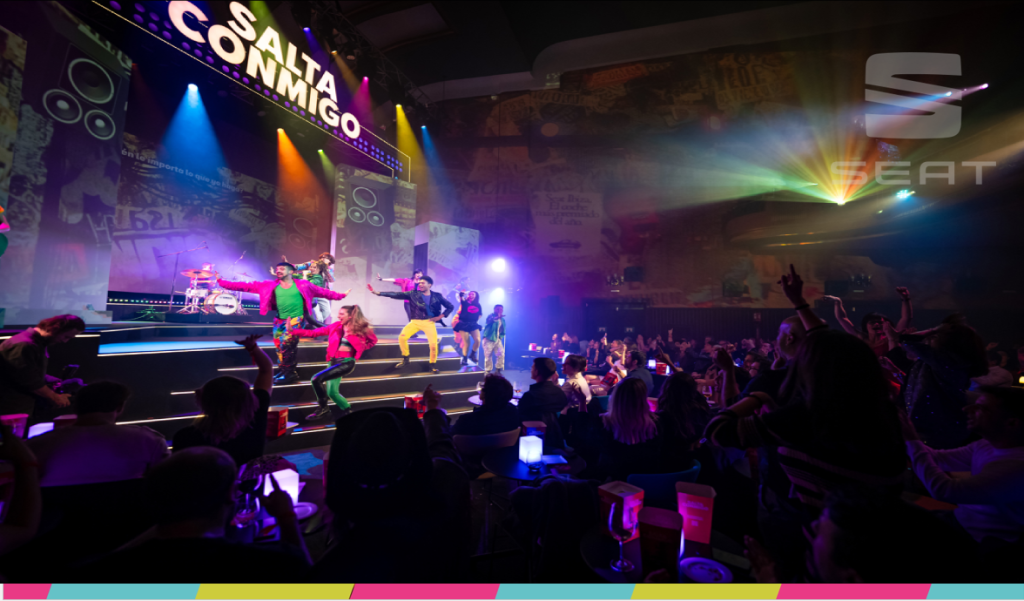
Exploring his campaign with SEAT, “Salta Conmigo” (Jump With Me), the world’s first musical dedicated to a car, created to celebrate the 40th anniversary of the SEAT Ibiza, he explained how a strong human insight can become the foundation of an integrated campaign that generates both emotional engagement and commercial results. By positioning music as an intergenerational cultural connector, the campaign transformed the Ibiza into a symbol of shared memories, driving earned media, brand affinity and business performance.
Furthermore, he highlighted the importance of designing amplification into an experience from the outset, explaining how cultural moments that resonate on an emotional level, naturally encourage audiences to share content and extend a campaign’s reach far beyond the live event itself.
The example demonstrated that creativity and commercial effectiveness are not mutually exclusive. In fact, some of the most successful experiential campaigns are those that combine powerful storytelling with a clear understanding of business objectives and audience behaviours.
The Future of Experiential Effectiveness
The webinar concluded with a clear challenge to the industry.
Experiential marketing can no longer rely solely on emotional impact and creative excellence. To secure greater investment and strategic influence, practitioners must become more confident in measuring outcomes, demonstrating value and speaking the language of business performance.
For experiential marketing to continue growing as a discipline, marketers must continue to create memorable moments while extending their skillsets in creating measurable impact.
The good news? The tools, frameworks and opportunities to do exactly that already exist.
The challenge now is putting them into practice.
For those looking to develop these capabilities further, the IPM’s Experiential Marketing Diploma has been designed to provide a structured pathway into the strategic, creative and commercial disciplines that underpin modern experiential marketing. Covering everything from audience insight and campaign planning to amplification, measurement and ROI, the programme aims to help practitioners at every stage of their career build the skills needed to drive greater impact for brands and clients.
Find out more about the Experiential Marketing Diploma and upcoming cohorts at the IPM.
Experiential Isn’t an ‘Activation’. It’s a Campaign.
One of the strongest themes to emerge from the discussion was in how experiential can justifiably claim its rightful position at the heart of any media plan.
As Michael argued, too many organisations still view experiential as a standalone activation rather than a strategic campaign platform.
“Experiential is not tactical. It’s strategic.”
Rather than being confined to a specific place or moment in time, or as being complementary to but not central to the media plan, effective experiential marketing should create impact before, during and long after the live experience takes place. To do this, marketers need to ensure experiences are designed as content and key message engines capable of driving engagement across paid, owned and earned channels.
This shift in mindset is a key principle of the Experiential Marketing Diploma, which encourages practitioners to think beyond event delivery and develop a broader understanding of how experiential supports wider business and marketing objectives.
Is Amplification Even The Right Word
The webinar challenged the use of a very familiar term: amplification
When we think about amplification it comes hand in hand with such terms as reach and visibility. However, Michael suggested that marketers should focus less on volume and more on resonance.
“It’s one thing to shout about something. It’s another to ensure the message resonates.”
The idea here is that success should be measured by whether or not key messages land as intended with the right audiences and therefore positively impact attitudes, behaviours, brand health and business outcomes. Amplification is just noise if it doesn’t create proven impact in these areas.
Designing Experiences That Travel
For experiential campaigns to extend beyond the live moment, they need to be designed with the metrics (and mechanics to achieve those metrics) in mind from the outset.
Michael outlined four key ingredients as a starting point from which to optimise the likelihood of an experience travelling beyond its physical location:
- An authentic brand story
- A relevant cultural agenda
- Strategic partnerships
- Credible voices, subject matter experts or advocates
These elements create the narrative foundations that open the way for experiences to become a content engine to power the entire media plan, while improving their potential to generate earned media, social sharing, positive sentiment and ongoing conversations.
Developing this type of strategic thinking is one of the reasons the Diploma was created; to help marketers build campaigns that deliver impact beyond time and place.
Why Experiential Needs to Speak the Language of the CFO
One of the most thought-provoking moments of the webinar centred on who experiential marketers are really trying to convince.
While big, insight-driven, creative ideas, the lifeblood of effective experiential, often appeal to CMOs, Michael argued that we tend to overlook the perspective of another individual who is never in the room at the pitch stage…
“We pitch the CMO. But we’re selling to the CFO.”
Agencies are encouraged to begin every measurement conversation with how the campaign outputs ladder back to the client’s wider strategic and commercial objectives when viewed from the CFO’s perspective. Who will usually care a lot less about your creativity.
Whether the goal is increasing market share, acquiring customers, or strengthening brand loyalty, experiential measurement frameworks need to demonstrate how campaign activity contributes to those outcomes.
Building Better Measurement Frameworks
Then Michael introduced practical approaches for creating more meaningful measurement strategies.
Michael outlined a broader framework for evaluating experiential effectiveness across areas such as:
- Quality of experience
- Audience fit
- Media engagement
- Brand perception shifts
- Advocacy and recommendation
- Commercial outcomes
- Long-term behaviour change
The key message was that measurement is also built into experience design and campaign planning from the very beginning and that identifying objectives, agreeing on KPIs and allocating budget for evaluation upfront is a collaborative exercise with your client, and a way for marketers to create a much clearer line between activity and outcomes.
Measurement, evaluation and ROI form a core part of the Experiential Marketing Diploma curriculum, reflecting the growing demand from clients and employers for marketers who can not only create impactful experiences but also robustly demonstrate their value.
Experiential Can Still be Emotional on a Global Scale
Martin Osterhus shared his perspective on developing experiences that resonate across different markets and cultures while delivering measurable business impact.
Exploring his campaign with SEAT, “Salta Conmigo” (Jump With Me), the world’s first musical dedicated to a car, created to celebrate the 40th anniversary of the SEAT Ibiza, he explained how a strong human insight can become the foundation of an integrated campaign that generates both emotional engagement and commercial results. By positioning music as an intergenerational cultural connector, the campaign transformed the Ibiza into a symbol of shared memories, driving earned media, brand affinity and business performance.
Furthermore, he highlighted the importance of designing amplification into an experience from the outset, explaining how cultural moments that resonate on an emotional level, naturally encourage audiences to share content and extend a campaign’s reach far beyond the live event itself.
The example demonstrated that creativity and commercial effectiveness are not mutually exclusive. In fact, some of the most successful experiential campaigns are those that combine powerful storytelling with a clear understanding of business objectives and audience behaviours.
The Future of Experiential Effectiveness
The webinar concluded with a clear challenge to the industry.
Experiential marketing can no longer rely solely on emotional impact and creative excellence. To secure greater investment and strategic influence, practitioners must become more confident in measuring outcomes, demonstrating value and speaking the language of business performance.
For experiential marketing to continue growing as a discipline, marketers must continue to create memorable moments while extending their skillsets in creating measurable impact.
The good news? The tools, frameworks and opportunities to do exactly that already exist.
The challenge now is putting them into practice.
For those looking to develop these capabilities further, the IPM’s Experiential Marketing Diploma has been designed to provide a structured pathway into the strategic, creative and commercial disciplines that underpin modern experiential marketing. Covering everything from audience insight and campaign planning to amplification, measurement and ROI, the programme aims to help practitioners at every stage of their career build the skills needed to drive greater impact for brands and clients.
Find out more about the Experiential Marketing Diploma and upcoming cohorts at the IPM.
News
IPM Awards 2026 Winners Revealed
Celebrate the stars of promotional marketing at the IPM Awards 2026, where creativity, innovation, and impact take centre stage. Explore all the winners from this year’s IPM Awards.
Experiential Diploma Open Day
A quick IPM recap of What Brits Want from Promotions 3.0, covering key consumer behaviours, motivations and insights shaping effective promotions in 2026.

The IPM Announces New Strategic Partnership with IMA Europe
A quick IPM recap of What Brits Want from Promotions 3.0, covering key consumer behaviours, motivations and insights shaping effective promotions in 2026.
News
IPM Awards 2026 Winners Revealed
Celebrate the stars of promotional marketing at the IPM Awards 2026, where creativity, innovation, and impact take centre stage. Explore all the winners from this year’s IPM Awards.
Experiential Diploma Open Day
A quick IPM recap of What Brits Want from Promotions 3.0, covering key consumer behaviours, motivations and insights shaping effective promotions in 2026.
The IPM Announces New Strategic Partnership with IMA Europe
A quick IPM recap of What Brits Want from Promotions 3.0, covering key consumer behaviours, motivations and insights shaping effective promotions in 2026.