

McDonald’s “CARDS” promotion might look like simple, nostalgic fun, customers opening packs, swapping duplicates, and chasing rewards—but there’s more structure behind it than you’d expect. As IPM Legal Advisor, Samuel Winterbourne explains, the campaign has been carefully designed to stay within UK promotional marketing rules, using a mix of instant wins and collect-to-complete mechanics to avoid crossing into lottery territory while still keeping customers engaged.

Sam’s Compliance Corner: McDonald’s CARDS – When Collectability Meets Compliance
When Collectability Meets Compliance
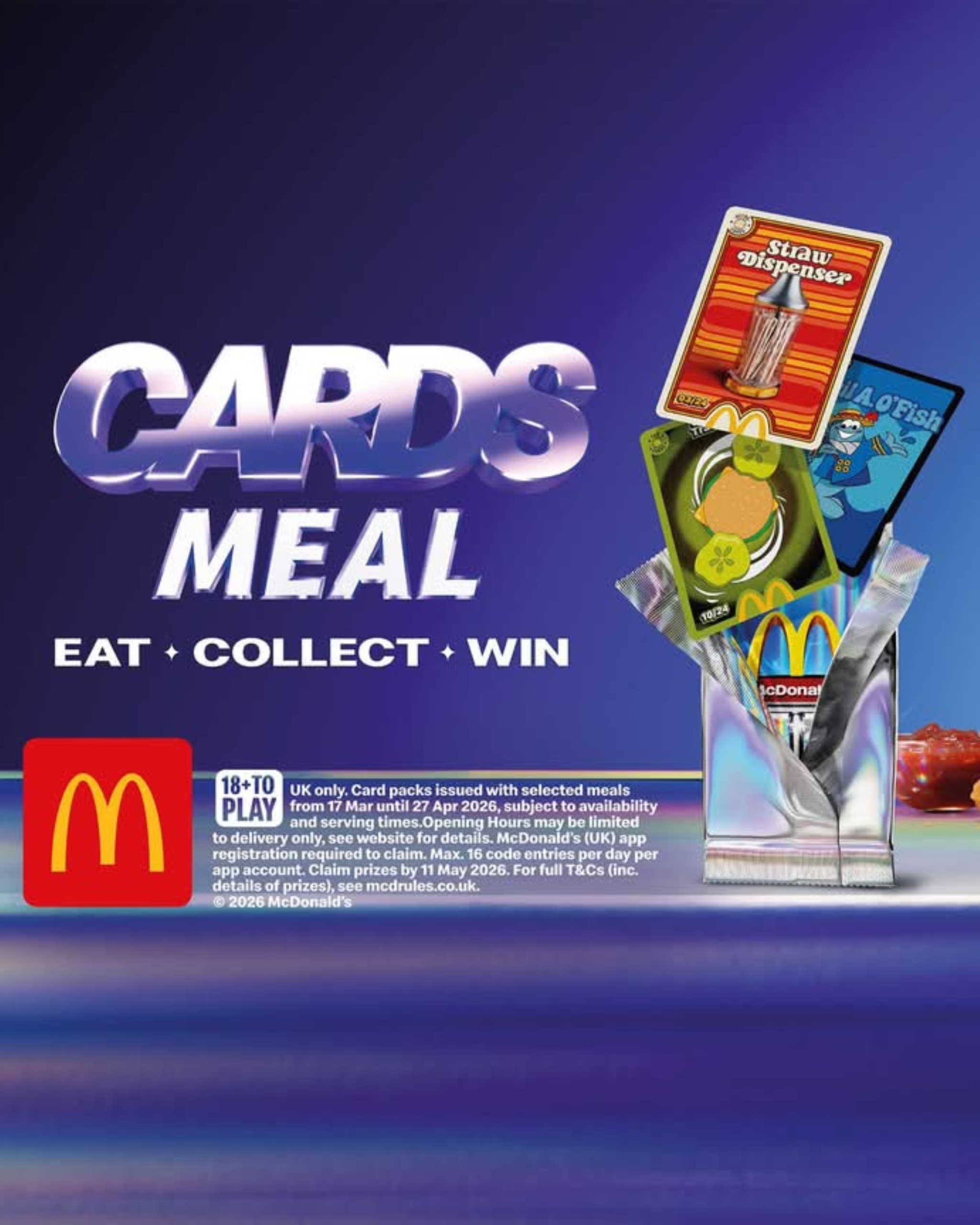
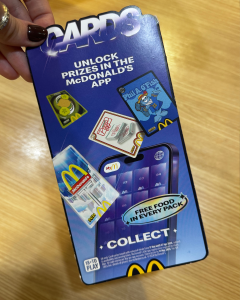
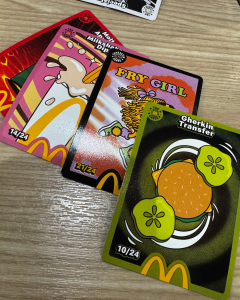
If you’ve been anywhere near a McDonald’s recently, you’ll have seen it: customers opening packs at tables, comparing duplicates, and working out whether they’re one card away from something bigger. It’s a familiar behaviour, but with a slightly new twist. This time, it’s CARDS; a nationwide collectable promotion built around nostalgia, brand equity and just enough gamification to keep people coming back.
On the surface, it’s simple. Buy a qualifying product, receive a pack of cards, and start collecting. Some cards deliver instant rewards, others contribute to completing sets that unlock prizes. But as with any promotion that combines purchase, chance and reward, the simplicity is doing a lot of heavy lifting. Because underneath it sits a structure that has clearly been built with the CAP Code front of mind.
The key here is that this is not a lottery. UK promotional marketing rules are very clear on that distinction. Where chance and payment are both present, you’re immediately in risky territory unless you introduce mitigating mechanics. McDonald’s leans into a well-established promotional format: a blend of instant wins and collect-to-complete sets. That hybrid approach helps ensure the campaign sits comfortably within permitted promotional frameworks rather than drifting into something that could be interpreted as an illegal lottery. It’s not new, but that’s exactly the point. Familiar mechanics are often the safest ones, both from a legal standpoint and in terms of consumer understanding.
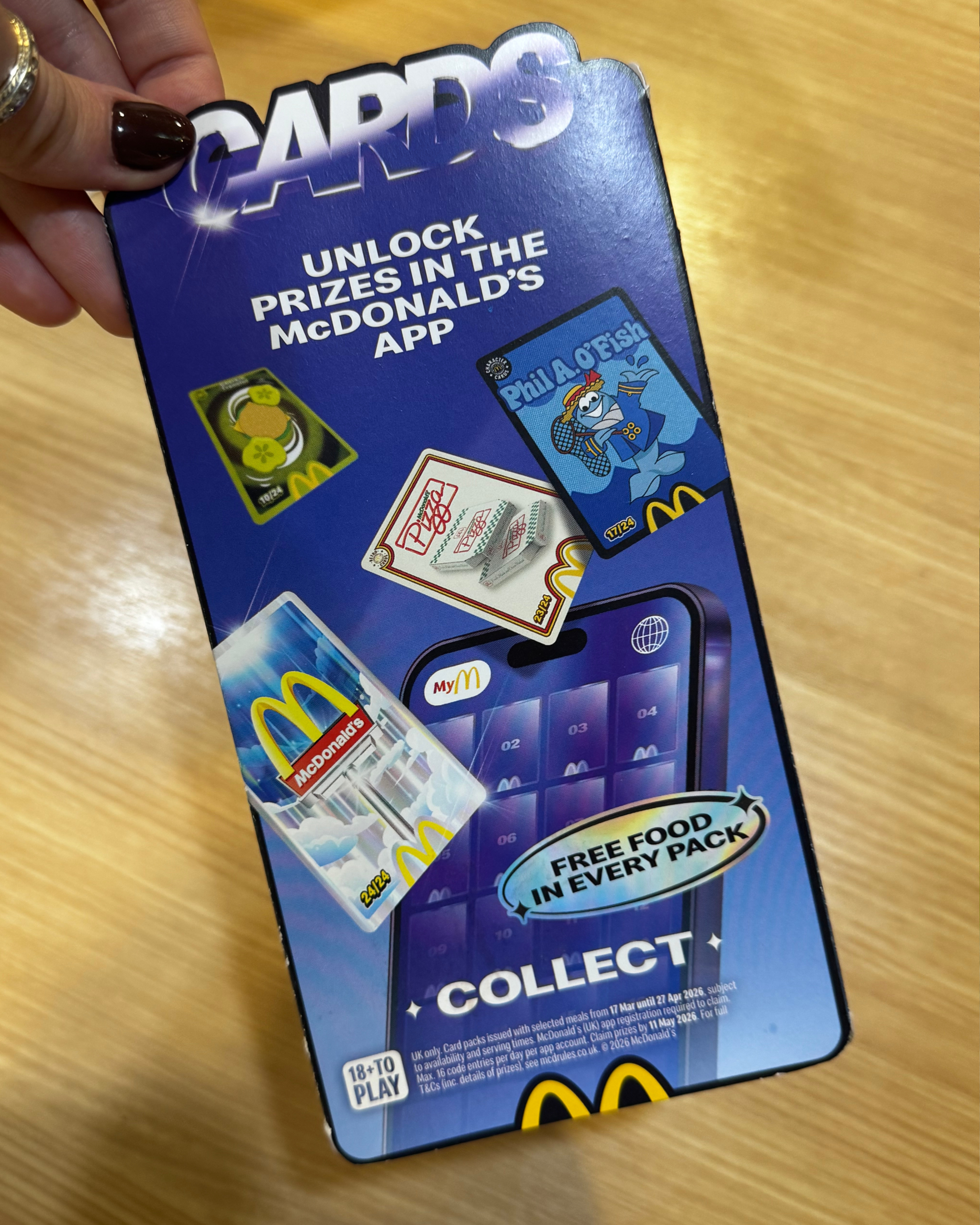
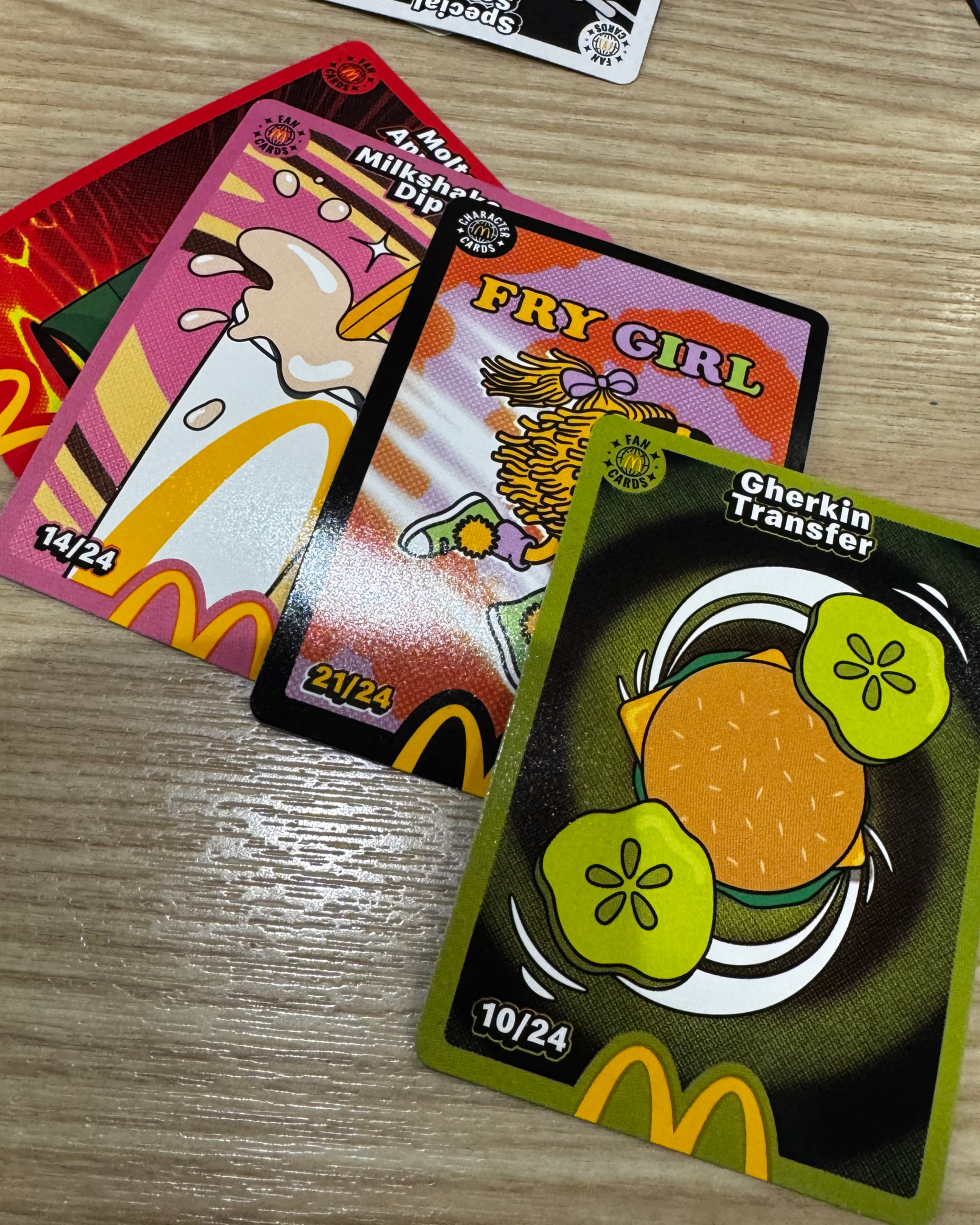
From an ASA perspective, what matters most is clarity and expectation. Consumers need to understand what they’re getting into: how to participate, what they can realistically win, and how difficult it might be to do so. Collectable campaigns inherently manage this quite well. There’s an implicit understanding that completing a full set is challenging, particularly where rarity tiers are involved. That works in McDonald’s favour. Rather than overpromising easy wins, the campaign leans into the idea of collectability and chance in a way that feels transparent. That balance is crucial because misleading consumers about their likelihood of winning, even unintentionally, is where brands tend to run into trouble.
There’s also the broader question of gamification. Promotions like this are designed to encourage repeat behaviour, and that always raises the question of where the line sits between engagement and undue pressure. In this case, the structure helps again. The inclusion of smaller, instant-win rewards creates a sense of accessibility, while the larger prizes sit behind more complex collection mechanics. That layering reduces the risk of the campaign being seen as exploitative or overly reliant on repeated purchasing to achieve an outcome. It’s a subtle point, but an important one in the current regulatory climate where the ASA is increasingly attentive to how promotional mechanics influence consumer behaviour.
Then there’s the data piece, which is often less visible but just as important. Campaigns like this no longer operate in isolation; they tend to connect with apps, digital journeys, or redemption platforms. That opens the door to valuable first-party data, but it also brings GDPR squarely into the conversation. Any data capture needs to be transparent, proportionate and clearly linked to the purpose of the promotion. Participation shouldn’t hinge on unnecessary data collection, and consumers need to understand exactly what they’re opting into. The strongest campaigns are the ones that offer a clear value exchange; if consumers feel they’re getting something meaningful in return, engagement follows naturally, but the compliance obligations don’t go away.
Of course, the real backbone of any promotion like this lies in the terms and conditions. That’s where the campaign either stands up or falls down. Eligibility, prize descriptions, availability, redemption mechanics, deadlines; all of it needs to be watertight and aligned with what’s being communicated publicly. With a campaign at this scale, even small ambiguities can quickly escalate. The fact that McDonald’s continues to run and evolve these kinds of promotions is a good indication of how much rigour is going on behind the scenes.
What’s particularly interesting about CARDS is that it shows how compliance and creativity aren’t opposing forces. In reality, the constraints of the regulatory framework are part of what shapes the campaign into something that works. The gamification is controlled, the messaging is clear, the mechanics are familiar, and the risk is managed without stripping out the fun. That’s not easy to achieve.
Promotional marketing always sits in that tension between excitement and regulation. Push too far, and you risk falling foul of the rules; play it too cautiously, and the campaign loses its impact. What McDonald’s has done here is find a balance that feels engaging without being misleading, and commercially effective without being non-compliant. From a compliance perspective, that’s exactly where you want to be, even if most consumers never realise just how much thought has gone into keeping it that way.

When Collectability Meets Compliance
If you’ve been anywhere near a McDonald’s recently, you’ll have seen it: customers opening packs at tables, comparing duplicates, and working out whether they’re one card away from something bigger. It’s a familiar behaviour, but with a slightly new twist. This time, it’s CARDS; a nationwide collectable promotion built around nostalgia, brand equity and just enough gamification to keep people coming back.
On the surface, it’s simple. Buy a qualifying product, receive a pack of cards, and start collecting. Some cards deliver instant rewards, others contribute to completing sets that unlock prizes. But as with any promotion that combines purchase, chance and reward, the simplicity is doing a lot of heavy lifting. Because underneath it sits a structure that has clearly been built with the CAP Code front of mind.
The key here is that this is not a lottery. UK promotional marketing rules are very clear on that distinction. Where chance and payment are both present, you’re immediately in risky territory unless you introduce mitigating mechanics. McDonald’s leans into a well-established promotional format: a blend of instant wins and collect-to-complete sets. That hybrid approach helps ensure the campaign sits comfortably within permitted promotional frameworks rather than drifting into something that could be interpreted as an illegal lottery. It’s not new, but that’s exactly the point. Familiar mechanics are often the safest ones, both from a legal standpoint and in terms of consumer understanding.
From an ASA perspective, what matters most is clarity and expectation. Consumers need to understand what they’re getting into: how to participate, what they can realistically win, and how difficult it might be to do so. Collectable campaigns inherently manage this quite well. There’s an implicit understanding that completing a full set is challenging, particularly where rarity tiers are involved. That works in McDonald’s favour. Rather than overpromising easy wins, the campaign leans into the idea of collectability and chance in a way that feels transparent. That balance is crucial because misleading consumers about their likelihood of winning, even unintentionally, is where brands tend to run into trouble.
There’s also the broader question of gamification. Promotions like this are designed to encourage repeat behaviour, and that always raises the question of where the line sits between engagement and undue pressure. In this case, the structure helps again. The inclusion of smaller, instant-win rewards creates a sense of accessibility, while the larger prizes sit behind more complex collection mechanics. That layering reduces the risk of the campaign being seen as exploitative or overly reliant on repeated purchasing to achieve an outcome. It’s a subtle point, but an important one in the current regulatory climate where the ASA is increasingly attentive to how promotional mechanics influence consumer behaviour.
Then there’s the data piece, which is often less visible but just as important. Campaigns like this no longer operate in isolation; they tend to connect with apps, digital journeys, or redemption platforms. That opens the door to valuable first-party data, but it also brings GDPR squarely into the conversation. Any data capture needs to be transparent, proportionate and clearly linked to the purpose of the promotion. Participation shouldn’t hinge on unnecessary data collection, and consumers need to understand exactly what they’re opting into. The strongest campaigns are the ones that offer a clear value exchange; if consumers feel they’re getting something meaningful in return, engagement follows naturally, but the compliance obligations don’t go away.
Of course, the real backbone of any promotion like this lies in the terms and conditions. That’s where the campaign either stands up or falls down. Eligibility, prize descriptions, availability, redemption mechanics, deadlines; all of it needs to be watertight and aligned with what’s being communicated publicly. With a campaign at this scale, even small ambiguities can quickly escalate. The fact that McDonald’s continues to run and evolve these kinds of promotions is a good indication of how much rigour is going on behind the scenes.
What’s particularly interesting about CARDS is that it shows how compliance and creativity aren’t opposing forces. In reality, the constraints of the regulatory framework are part of what shapes the campaign into something that works. The gamification is controlled, the messaging is clear, the mechanics are familiar, and the risk is managed without stripping out the fun. That’s not easy to achieve.
Promotional marketing always sits in that tension between excitement and regulation. Push too far, and you risk falling foul of the rules; play it too cautiously, and the campaign loses its impact. What McDonald’s has done here is find a balance that feels engaging without being misleading, and commercially effective without being non-compliant. From a compliance perspective, that’s exactly where you want to be, even if most consumers never realise just how much thought has gone into keeping it that way.