

The State of Loyalty Scheme Engagement in Europe
Mando and YouGov’s Latest Research Paints a Nuanced Picture of Loyalty Engagement, Appeal and Impact Across the Continent
The fourth edition of the Understanding Loyalty in Europe whitepaper, produced by Mando in partnership with YouGov, is now available. Building on three years of tracking data, this year’s report examines loyalty programme membership, appeal and impact across 24 European markets.

Mando presents: Understanding Loyalty in Europe 4.0
Alongside the core data, the paper draws on a network of in-market loyalty experts to deliver country-level commentary, programme highlights and future predictions for their markets. In a new addition to the report Mando also examine three industry deep dives covering gamification, partnerships and ROI, alongside case studies from Miles & More and The Coca-Cola Company’s newly launched EU-wide programme, The Club.
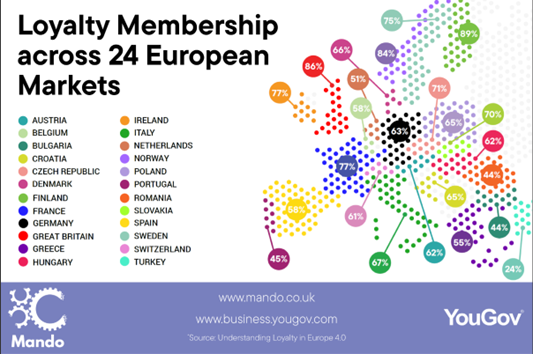
Membership: 63.3% loyalty programme membership across Europe
Across all 24 markets, almost two thirds of adults are now members of at least one loyalty programme. Finland leads the way at 88.7%, followed closely by Great Britain at 86.1% and Norway at 83.8%. At the other end of the spectrum, Turkey (23.8%), Bulgaria (44.4%) and Romania (44.5%) remain significantly below the European average.
Programme Appeal is on the rise, but unevenly distributed
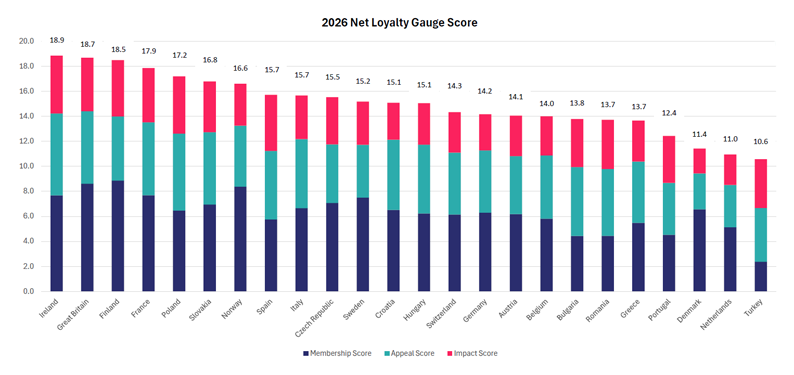
Programme appeal has continued to grow, with 59.5% of European adults now agreeing that loyalty programmes are a good way for brands to reward their customers (up from 55.4% in 2024). British consumers remain the most enthusiastic, with 74.6% holding this view, followed by Irish (72.4%), Polish (69.3%) and German (67.6%) respondents. Danish consumers remain the most sceptical at just 38.6%, alongside the Turkish (47.1%) and the Dutch (47.8%).
Scheme Impact is positive overall, but nuanced
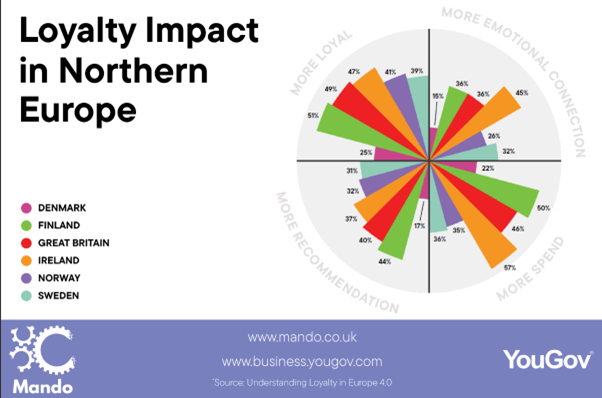
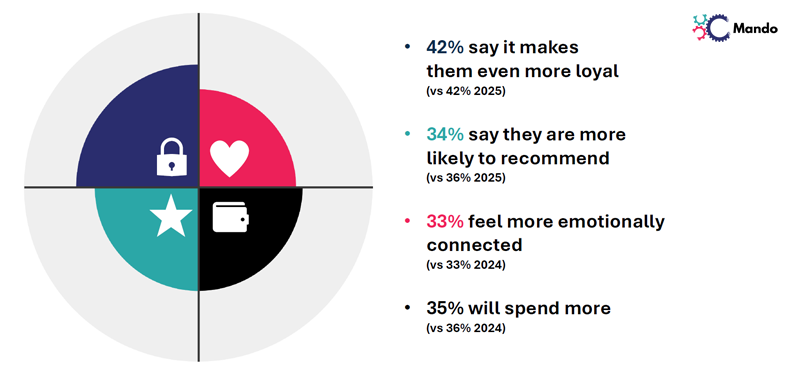
On the impact side, 41.9% of programme members say membership makes them more loyal to a brand, 35% report spending more, 33.3% feel a stronger emotional connection and 34.5% say they are more likely to recommend a brand they belong to. Those headline figures look reasonable in isolation, but the market-by-market detail in the report tells a more complicated story.
Alongside the core data, the paper draws on a network of in-market loyalty experts to deliver country-level commentary, programme highlights and future predictions for their markets. In a new addition to the report Mando also examine three industry deep dives covering gamification, partnerships and ROI, alongside case studies from Miles & More and The Coca-Cola Company’s newly launched EU-wide programme, The Club.
Membership: 63.3% loyalty programme membership across Europe
Across all 24 markets, almost two thirds of adults are now members of at least one loyalty programme. Finland leads the way at 88.7%, followed closely by Great Britain at 86.1% and Norway at 83.8%. At the other end of the spectrum, Turkey (23.8%), Bulgaria (44.4%) and Romania (44.5%) remain significantly below the European average.
Programme Appeal is on the rise, but unevenly distributed
Programme appeal has continued to grow, with 59.5% of European adults now agreeing that loyalty programmes are a good way for brands to reward their customers (up from 55.4% in 2024). British consumers remain the most enthusiastic, with 74.6% holding this view, followed by Irish (72.4%), Polish (69.3%) and German (67.6%) respondents. Danish consumers remain the most sceptical at just 38.6%, alongside the Turkish (47.1%) and the Dutch (47.8%).
Scheme Impact is positive overall, but nuanced
On the impact side, 41.9% of programme members say membership makes them more loyal to a brand, 35% report spending more, 33.3% feel a stronger emotional connection and 34.5% say they are more likely to recommend a brand they belong to. Those headline figures look reasonable in isolation, but the market-by-market detail in the report tells a more complicated story.
Three Findings Worth Paying Attention To:
1. Enrolment and engagement are no longer the same thing
Membership numbers in several major markets are climbing; France is up four percentage points to 77%, Germany up three points to 63% yet impact metrics in both countries are heading in the opposite direction. France’s loyalty expert, Michael Flacandji describes a broader shift from active participation to passive enrolment: consumers are joining programmes but not meaningfully engaging with them. Germany, meanwhile, presents a striking paradox with record-high membership sitting alongside a sharp drop in spend impact. For loyalty marketers, the challenge has shifted. Programme recruitment is no longer the issue, driving activation is.
2. Saturation is a real and present concern in mature markets
3. The emotional connection gap remains the industry’s central
Across all four years of this research, one finding has remained stubbornly consistent: loyalty programmes are broadly effective at influencing transactional behaviour, but far less successful at building emotional connection. Just 33.3% of members across Europe report feeling more emotionally connected to a brand as a result of membership. In some markets the gap is stark. Denmark, for example, has 66% membership but only 25% of those members say they feel more loyal as a result. The programmes highlighted as ones to watch in this paper, from Gail’s in Britain to ICA Stammis in Sweden to Żappka in Poland, are those successfully bridging the gap between utility and emotion.
Three Findings Worth Paying Attention To:
- Enrolment and engagement are no longer the same thing
Membership numbers in several major markets are climbing; France is up four percentage points to 77%, Germany up three points to 63% yet impact metrics in both countries are heading in the opposite direction. France’s loyalty expert, Michael Flacandji describes a broader shift from active participation to passive enrolment: consumers are joining programmes but not meaningfully engaging with them. Germany, meanwhile, presents a striking paradox with record-high membership sitting alongside a sharp drop in spend impact. For loyalty marketers, the challenge has shifted. Programme recruitment is no longer the issue, driving activation is.
2. Saturation is a real and present concern in mature markets
Finland and Great Britain sit at 89% and 86% programme membership respectively, are approaching a natural ceiling. Sweden has already moved through this phase and out the other side: total programme memberships there have actually declined as consumers are making deliberate choices about which schemes deserve a place in their digital wallets. Rather than collecting loyalty cards, Swedish consumers are concentrating their engagement with a small number of programmes they find genuinely useful. This pattern is one of the more significant structural shifts identified this year, and one that loyalty leaders in other maturing markets should be watching.
- The emotional connection gap remains the industry’s central challenge
Across all four years of this research, one finding has remained stubbornly consistent: loyalty programmes are broadly effective at influencing transactional behaviour, but far less successful at building emotional connection. Just 33.3% of members across Europe report feeling more emotionally connected to a brand as a result of membership. In some markets the gap is stark. Denmark, for example, has 66% membership but only 25% of those members say they feel more loyal as a result. The programmes highlighted as ones to watch in this paper, from Gail’s in Britain to ICA Stammis in Sweden to Żappka in Poland, are those successfully bridging the gap between utility and emotion.
The Bigger Picture
What this research makes clear, across every market and every metric, is that loyalty is no longer a simple game of member acquisition. The programmes that stand out in 2026 are those investing in personalisation, emotional resonance and smart use of data and those that can demonstrate a measurable return on that investment to increasingly scrutinous CFOs.
The full whitepaper, including all 24 market profiles, programme case studies and industry deep dives, is available to download at mando.co.uk.
News
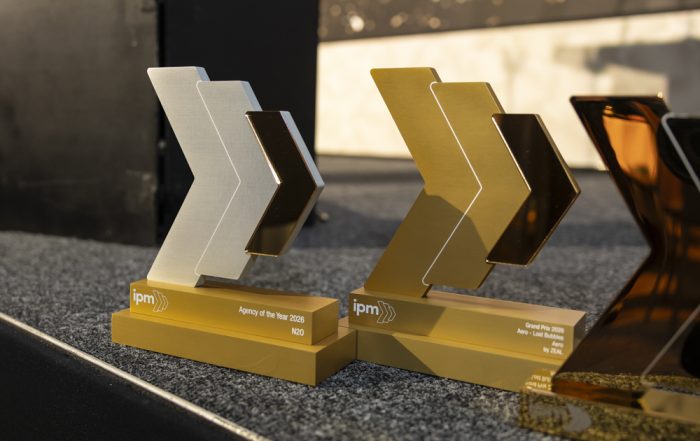
IPM Awards 2026 Winners Revealed
Celebrate the stars of promotional marketing at the IPM Awards 2026, where creativity, innovation, and impact take centre stage. Explore all the winners from this year’s IPM Awards.

Experiential Diploma Open Day
A quick IPM recap of What Brits Want from Promotions 3.0, covering key consumer behaviours, motivations and insights shaping effective promotions in 2026.

The IPM Announces New Strategic Partnership with IMA Europe
A quick IPM recap of What Brits Want from Promotions 3.0, covering key consumer behaviours, motivations and insights shaping effective promotions in 2026.
News
IPM Awards 2026 Winners Revealed
Celebrate the stars of promotional marketing at the IPM Awards 2026, where creativity, innovation, and impact take centre stage. Explore all the winners from this year’s IPM Awards.
Experiential Diploma Open Day
A quick IPM recap of What Brits Want from Promotions 3.0, covering key consumer behaviours, motivations and insights shaping effective promotions in 2026.
The IPM Announces New Strategic Partnership with IMA Europe
A quick IPM recap of What Brits Want from Promotions 3.0, covering key consumer behaviours, motivations and insights shaping effective promotions in 2026.